


Seven Ethiopian Armed Groups Form Alliance to Challenge Abiy Ahmed
Seven Ethiopian armed movements have announced a political and military alliance aimed at removing Prime Minister Abiy Ahmed, though differences among the groups could limit its effectiveness.

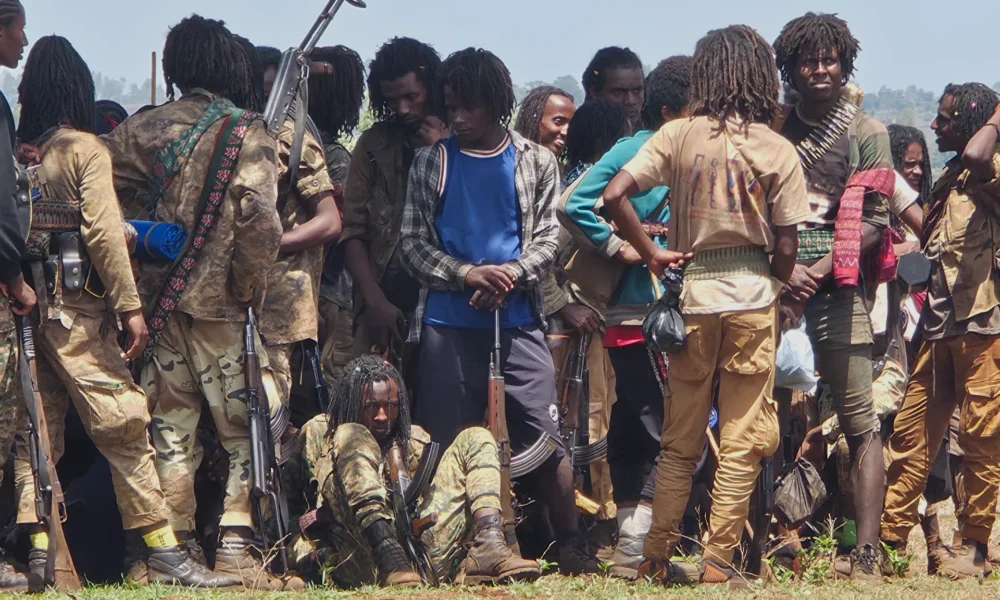
Seven armed movements in Ethiopia have announced a new alliance pledged to remove Prime Minister Abiy Ahmed and establish a transitional administration after his departure.
Table Of Content
The Ethiopian Peoples’ Forces Alliance for Survival includes the Amhara Fano National Movement, the Tigray People’s Liberation Front (TPLF), the Oromo Liberation Army (OLA), the Ogaden National Liberation Front, the Afar Revolutionary Democratic Unity Front, the Benishangul Peoples’ Liberation Movement and the Gumuz Peoples’ Democratic Movement.
Fano commander Zemene Kassie, who chairs the alliance, read its founding statement on Tigrai TV on Sunday. The TPLF said the coalition was created to bring peace and democracy to Ethiopia.
A political alliance with uncertain military reach
The announcement brings several conflicts and political disputes under one framework, but it does not yet represent a single, unified army. Kjetil Tronvoll, a professor of peace and conflict studies at Oslo New University College, said the groups had not created a coherent force capable of marching on Addis Ababa.
The movements have different territorial claims, grievances and political histories. Jawar Mohammed, an Oromo politician and former ally of Abiy, said the members had no common political objective and lacked a shared tactical goal.
Tronvoll also warned that disagreements over command and military priorities could quickly undermine cooperation. He said that if the alliance’s members ever reached the capital, conflict could begin among them.
“All these groups have their own different beef with the federal government,” said Magnus Taylor, deputy director of the International Crisis Group’s Horn of Africa project. He described the conflict as “substantially a domestic Ethiopian phenomenon,” despite the regional links surrounding it.
Tensions in Tigray
The alliance’s formation comes amid renewed tensions in Tigray, where federal and Tigrayan forces clashed near Shererina, close to the Sudanese border, on August 1. Heavy artillery and drones were reportedly used in the fighting.
The TPLF restored the legislative council that existed before the war in May and installed Debretsion Gebremichael as its chairman and regional president. The move effectively established a rival political authority to the interim administration.
Tigrayan forces also seized Alula Aba Nega International Airport in Mekelle, according to reports by AFP citing an airport employee and a Western embassy security source.
The TPLF has reported further drone attacks. It said two drones struck homes in Mekelle on August 20, leaving 13 people wounded, and that a drone destroyed a truck carrying 41 tonnes of food aid near Adi Daero on September 20. Those accounts could not be independently verified.
The mayor of Alamata said drone strikes on two schools killed 14 civilians and wounded 22 others. That account also could not be independently verified, and the federal government did not immediately comment on the reported attack.
Disputes left unresolved
The TPLF previously fought federal forces, Eritrean troops and Amhara forces in a war that began in November 2020 and ended with the Pretoria agreement in November 2022. Olusegun Obasanjo, the African Union mediator, estimated that the conflict caused about 600,000 deaths, although estimates have varied.
The agreement established terms for Tigray’s disarmament but did not resolve the status of Western Tigray, also known as Welkait. The area is claimed by both Tigray and Amhara and is administered by Amhara forces.
Michael Asgedom, a TPLF spokesperson, said the agreement had been used by the government to harm Tigrayans. He said the alliance was intended to build a new order “over the ruins of Abiy Ahmed’s system.”
Billene Seyoum, a spokesperson for Abiy, told Reuters that alliance members had been cooperating for some time with financial backing from Eritrea. Asmara has repeatedly denied the accusation. The International Crisis Group has assessed that Eritrea wants a buffer zone along its southern border, while Tronvoll has said Eritrean troops are currently in Tigray; that claim could not be independently verified.
Prospects for wider conflict
The OLA described its participation as a “procedural consensus” and demanded that Fano disown a faction in Wollega that it says was armed by the government. Talks between the OLA and the Ethiopian government collapsed in Tanzania in 2023.
Tom Gardner, author of The Abiy Project, said Abiy’s strategy had relied on a low-level conflict involving drones, proxies and siege tactics. He warned that the new alliance could contribute to a full-scale war.
Tronvoll said the TPLF had been disadvantaged in recent confrontations with federal air power and considered a gradual deterioration focused on southern Tigray more likely than an immediate decisive battle. He estimated that tens of thousands of people had already left Tigray ahead of possible fighting and recruitment.
Whether the seven movements can overcome their competing interests and establish effective joint command remains uncertain.



No Comment! Be the first one.