


TPLF offensive claims deepen Ethiopia’s Tigray crisis
Ethiopia’s TPLF has reportedly seized federally controlled airports in Tigray and attacked positions in Afar and Amhara, while the regional government says federal forces began the latest offensive.

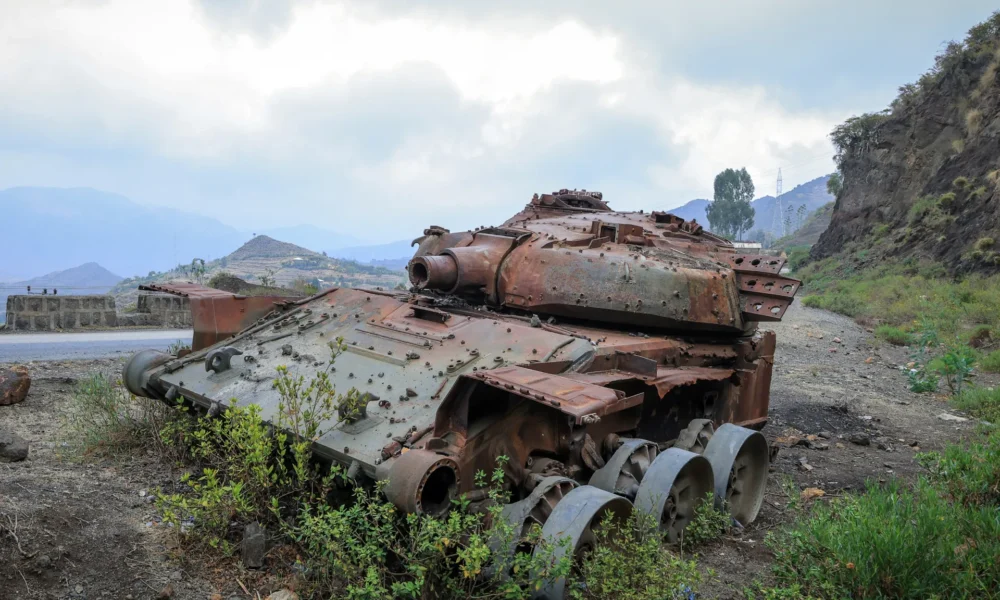
Fighting in and around Ethiopia’s Tigray region has escalated, with conflicting claims from the Tigray People’s Liberation Front (TPLF), Ethiopia’s federal government and the Tigray regional government over who initiated the latest hostilities.
Table Of Content
Getachew Reda, an adviser to Prime Minister Abiy Ahmed, said the TPLF had launched what he described as an “all-out offensive” against government positions in the Afar and Amhara regions. In a post on X, Reda also said the group had taken control of federally controlled airports in Tigray, disrupting flights to and from the region.
“It has taken over federally controlled airports in Tigray leading to the suspension of flights to and from Tigray,” Reda wrote. He did not specify which airports were allegedly seized.
The reported military developments have not been independently verified, and the extent of the TPLF’s territorial control, as well as any casualties or damage, remains unclear.
Conflicting accounts of the fighting
The Tigray regional government offered a sharply different account. In a statement posted on Facebook, it said federal forces had invaded Tigray and carried out intensive bombardments using aircraft, drones and artillery.
The regional government said the Tigray army had been instructed to respond and had entered what it called a defensive battle. Its statement described the federal action as a “genocidal invasion”, an allegation that has not been independently established.
Clashes were reported in parts of Afar, including Abala and Berahle, while shelling was also reported along the border with Amhara. An Al Jazeera correspondent reported significant military build-ups by several parties in border areas.
The competing claims make it difficult to establish the precise sequence of events or the geographic scope of the fighting.
Fears of a return to war
Alan Boswell, the Horn of Africa director at the International Crisis Group, told Al Jazeera that the 2022 peace agreement appeared to have broken down and warned that the situation had become highly dangerous.
Boswell said the TPLF’s alliance with six other armed groups and its stated aim of overthrowing Abiy Ahmed’s government came close to a declaration of war. He also said the federal government’s drone campaign against the TPLF had continued and intensified.
“If we’re not all the way back into something like a full war, we are very, very close,” Boswell said.
The TPLF ruled Ethiopia from 1991 to 2018 before being sidelined after Abiy Ahmed became prime minister. Political tensions later contributed to the civil war in Tigray from 2020 to 2022. The Pretoria Peace Agreement ended the fighting, although parts of the agreement remain unfulfilled.
About 600,000 people were estimated by the African Union to have been killed during the conflict, while approximately one million people remain displaced, according to the source report.
Regional implications
The latest escalation has also renewed concerns about the wider Horn of Africa. Ethiopia and Eritrea fought alongside federal forces against the TPLF during the civil war, but Ethiopia now accuses former allies of supporting the TPLF.
Boswell said Eritrea’s alignment with the TPLF could make the conflict regional. He also pointed to Eritrea’s close relationship with the Sudanese army and deteriorating relations between Ethiopia and that force.
“This is all becoming one big regional mess,” Boswell said, warning that the consequences could become severe without de-escalation.




No Comment! Be the first one.